
ONLYFUN: Random Video Chat
Yoloria Teching LimitedSocial
4.367.00 Reviews
- Version
- 60.41.14
- Installs
- 100.00K
- Age Rating
- Mature 17+
Screenshots

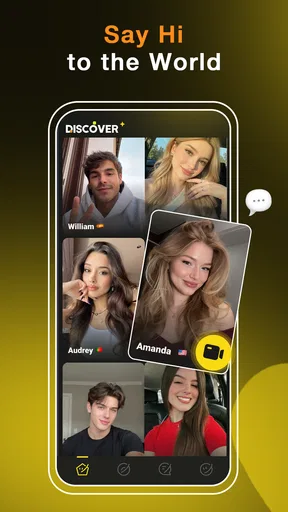


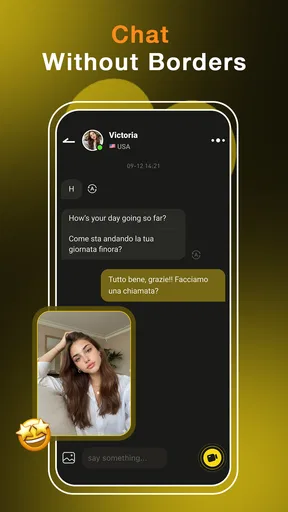

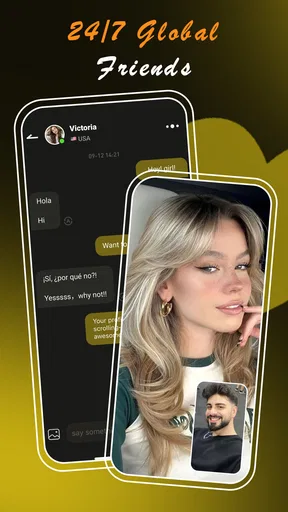
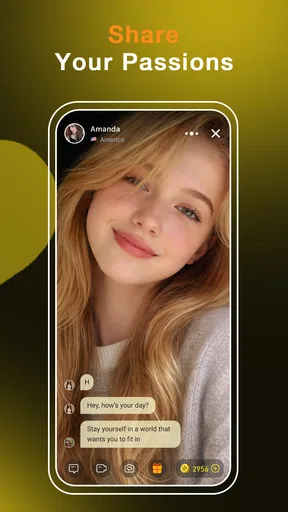
Our Review of ONLYFUN: Random Video Chat
 Analysis by Appyee
ONLYFUN: Random Video Chat is the kind of social app I open when I want a conversation without arranging one first. Its central idea is simple: connect with unfamiliar people through random chat and live video, then decide quickly whether the exchange is worth continuing. In my experience, that immediacy is both its strongest appeal and the reason it demands more caution than a normal messaging app.
My overall view is positive but selective. ONLYFUN works best as a spontaneous way to meet people outside your usual circle, not as a dependable tool for making close friendships or keeping in touch with people you already know. The experience is shaped by chance, short interactions, and the judgment required to leave uncomfortable conversations quickly. If that sounds entertaining rather than exhausting, it is worth trying. If you prefer predictable communities, detailed profiles, or strong control over who contacts you, another kind of social platform will suit you better.
What the random video format feels like in everyday use
The app belongs to the social category and is developed by Yoloria Teching Limited. It is free to install, which makes experimenting with it easy, although in-app purchases range from $1.99 to $144.99 per item. That difference matters: the basic invitation is accessible, but anyone who becomes heavily invested should pay attention before spending money inside the app.
The first thing I noticed is how quickly the format changes the rhythm of socializing. On a conventional network, I usually read a profile, browse posts, or wait for a reply. Here, the point is the encounter itself. A video connection creates an immediate decision: stay, talk, move on, or end the interaction. That makes the app feel more active than a feed-based service, but also less relaxed.
A useful everyday scenario is a quiet evening when I want a little conversation but do not want to post publicly or message several friends. ONLYFUN can fill that gap with a few spontaneous exchanges. It is also suitable for someone who enjoys practicing casual conversation with strangers, provided they are comfortable ending chats without feeling obliged to explain themselves.
The trade-off is that randomness removes much of the context people normally use to judge compatibility. You may meet someone friendly, someone who has nothing to say, or someone whose behavior makes you uncomfortable. The app’s value therefore depends less on every individual connection being good and more on whether moving through several imperfect conversations feels enjoyable to you.
Why live video is more engaging than ordinary matching
Video gives conversations a sense of presence that text-only matching often lacks. Even a brief exchange can reveal energy, humor, and conversational style more naturally than a carefully written introduction. For users who find endless profile browsing tiring, this directness is a genuine strength.
At the same time, video raises the social stakes. A text message gives me time to think and offers some distance; a live camera interaction does not. I would recommend beginning with the least personal approach possible, avoiding details that identify where you live, work, or study. A good workflow is to treat the first moments as a quick comfort check rather than an interview: if the tone feels wrong, leave immediately.
That habit is more important here than on many ordinary social apps. The mature seventeen-plus content rating is a clear signal that this is not a service I would hand to a child or recommend for unsupervised younger users. Adults should still use judgment, because an age label does not turn a random video interaction into a trusted one.
Small habits that make the experience better
I found that the best way to use this type of app is to give each session a purpose. Going in with a simple intention, such as having two or three light conversations, prevents the endless-swiping feeling that can make random platforms dull. It also makes it easier to stop when the experience is no longer enjoyable.
Another useful habit is to keep the first conversation broad. Music, films, food, travel ideas, or everyday routines are safer starting points than personal history. This creates enough material for a natural exchange without giving a stranger information that can be combined with details from your camera background or voice.
I would also avoid treating a pleasant first conversation as proof of trust. A friendly tone is encouraging, but it is not the same as knowing someone. If a person quickly asks for money, private contact details, intimate images, or a move to another service, I would end the chat rather than negotiate. The app is most enjoyable when curiosity stays ahead of commitment.
Finally, I would use the camera environment deliberately. A plain background, headphones, and a reasonably quiet room make it easier to focus on the conversation and reduce accidental exposure of personal information. This is not a special feature of ONLYFUN; it is a practical way to manage the risks created by live video.
Where ONLYFUN is strongest, and where it loses ground
The strongest part of the app is its low barrier to spontaneous interaction. I do not need to build a polished public identity before trying a conversation. That makes it more immediate than many social networks, where the pressure to present an attractive profile can become the main activity.
It also offers a different kind of discovery from interest-based communities. In a group organized around books, games, or a profession, I already know something about the other participants. ONLYFUN removes that filter. The result can be less efficient, but occasionally more surprising. Someone I would never have found through my normal interests may still be easy to talk to for a few minutes.
The app has also attracted a visible audience: it has passed 100K+ installs, with a 4.3 average from around 515 ratings and 67 reviews. Those figures suggest that the concept has found a real user base, while the review volume is still modest enough that I would not treat the average as a complete picture of every experience.
Its current version is 60.41.14, and it requires operating system version 12 or later. For someone with an older device, that requirement is an immediate practical consideration before spending time looking for a download. On a compatible phone, the more important question is whether the device, connection, and surroundings are suitable for live video rather than whether the app can be installed.
The meaningful weakness: chance can become friction
Random matching is exciting only when the next interaction feels worth discovering. When several conversations in a row are awkward, silent, or poorly matched, the same design becomes tiring. Unlike a conventional social app, I cannot rely on a carefully chosen interest group or a familiar network to improve the odds.
This is where ONLYFUN is weaker than alternatives built around profiles, communities, or messaging. A platform based on shared interests is usually better when I want repeated conversations with people who already care about the same subject. A standard messenger is better for maintaining relationships. A moderated community is often better for users who want a stronger sense of belonging and clearer social expectations.
There is also a financial boundary worth keeping in mind. The app is free to start, but the presence of purchases from $1.99 to $144.99 per item means I would not assume every useful part of the experience is cost-free. Before buying anything, I would check exactly what the item does, whether it is needed for the way I plan to use the app, and whether a short session already gives me enough value.
The mature rating is another limitation for families. I would not describe ONLYFUN as a general-purpose family social app. The combination of adult-oriented access, strangers, and live video requires a level of independence and caution that younger users may not have. Parents looking for a controlled communication tool should choose something designed around known contacts or supervised groups instead.
Who should try it, and who should skip it
I think ONLYFUN is a good fit for adults who enjoy conversational spontaneity and do not mind that many interactions will be brief. It can suit outgoing users who like meeting unfamiliar people, as well as quieter users who want low-commitment practice starting conversations. The latter group should remember that leaving a chat is acceptable; the app works better when there is no pressure to perform.
It is also useful for people who are bored with passive scrolling. Instead of consuming an endless stream of posts, I can participate in a real-time exchange and then move on. That makes the app feel more social in the literal sense, even when the connection lasts only a short time.
I would skip it if I am looking for a serious relationship system, a reliable language-exchange partner, or a private place for sensitive conversations. Random video is not an efficient substitute for a service with detailed compatibility tools, verified contacts, or topic-based groups. It is better understood as an open-ended social experiment than as a structured matching solution.
Users who are easily drained by interruptions should approach it carefully as well. The format favors quick reactions and tolerance for awkward pauses. If I prefer to compose thoughtful messages, inspect someone’s interests, and choose when to respond, a text-centered platform will probably feel more comfortable and productive.
How I would use it responsibly
I would start with a short time limit and no expectation that every connection needs to become a friendship. That keeps the app in its strongest lane: casual discovery. I would use a neutral username, keep identifying objects out of view, and avoid sharing a phone number, home address, workplace, financial information, or private images.
My rule for uncomfortable behavior would be simple: end the conversation rather than trying to correct a stranger. If an interaction becomes sexual, threatening, manipulative, or persistently intrusive, there is no benefit in staying to be polite. I would also avoid sending money or accepting urgent requests from people I have just met through a random connection.
For anyone considering purchases, I would first use the free experience long enough to decide whether the basic conversation format is genuinely enjoyable. The wide price range of available items makes restraint sensible. A purchase should solve a clearly understood need, not be an impulsive response to a disappointing run of matches.
My final verdict on ONLYFUN
ONLYFUN: Random Video Chat succeeds because it removes preparation from meeting strangers. I can open it, enter the social flow, and discover quickly whether a conversation has energy. That directness is more refreshing than a conventional feed when I want human contact rather than content, and it gives the app a clear identity in the crowded social category.
But the same design makes it inconsistent. Randomness brings novelty, not reliability. Live video can create a stronger connection than text, yet it also exposes me to more awkwardness and requires better boundaries. The mature seventeen-plus rating, the need for operating system version 12 or later, and the range of in-app purchase prices are practical details that should shape expectations before installation.
My recommendation is specific: try it if you are an adult who enjoys brief, unplanned conversations and can leave a bad interaction without hesitation. Use it in short sessions, protect personal information, and treat pleasant encounters as interesting moments rather than instant trust. Choose an interest-based community, a conventional messaging app, or a more structured matching service when you need continuity, privacy, or dependable compatibility.
ONLYFUN is at its best as a spontaneous conversation tool, not a complete replacement for a trusted social circle. With that expectation, I can see why it appeals to a growing audience. Without it, the unpredictability that makes the app exciting can quickly become its biggest weakness.
Verdict
Strengths of ONLYFUN: Random Video Chat
- Quickly connects you with new people through random video matching.
- Simple interface makes starting a conversation easy for first-time users.
- Video interactions can feel more personal than text-based social apps.
- Useful for practicing conversational skills with people from different backgrounds.
- Short sessions make it easy to leave and try another match.
Limitations of ONLYFUN: Random Video Chat
- Conversations may be awkward or end abruptly without explanation.
- User profiles can be limited, making matches unpredictable.
- Video chat may consume significant mobile data and battery.
- You may encounter inappropriate behavior despite reporting tools.
- Some features or extended use may require in-app purchases.
Similar Picks in This Category
View All
Meta Platforms, Inc.4.6

Instagram4.0

Likee-Live, Chat & Party Games
Likeme Pte. Ltd.4.4

Facebook Lite
Meta Platforms, Inc.4.5

TikTok - Videos, Shop & LIVE
TikTok Pte. Ltd.4.0

Moj: Free Short Drama & Reels
ShareChat4.1
Frequently Asked Questions
What is ONLYFUN: Random Video Chat, and how does it work?
ONLYFUN: Random Video Chat is a social communication app designed to connect users with people they do not know through random video conversations. After creating or opening a profile, you can usually begin matching with other users and decide whether to continue or move to the next person. The experience depends heavily on the available user base, internet quality, and your chosen privacy settings.
Is ONLYFUN: Random Video Chat free to download and use?
The application may be available to download at no initial cost, but some communication features can depend on in-app purchases, virtual credits, subscriptions, or other optional payments. Before using paid functions, check the current pricing shown in the app store and inside the application. Availability of features and payment requirements may also vary between Android and iOS versions or by country.
Is ONLYFUN: Random Video Chat safe for teenagers and children?
Random video chat services can expose users to strangers, unexpected conversations, inappropriate behavior, scams, or requests for personal information. For that reason, parents should carefully review the app’s age rating, privacy policy, and safety tools before allowing access. Children and younger teenagers should not use this type of service without close parental supervision, and users should report or block suspicious accounts immediately.
What privacy information does ONLYFUN: Random Video Chat require?
The information requested can vary depending on the version of the app and the device, but random chat platforms may require account details, profile information, camera and microphone permissions, and technical data needed to operate the service. Review the permissions during installation and disable anything unnecessary. Avoid sharing your full name, address, phone number, workplace, financial details, passwords, or private images with strangers.
What should I do if I encounter inappropriate or abusive users?
If another user behaves offensively, pressures you, sends unwanted content, or asks for suspicious information, end the conversation rather than arguing. Use the in-app block and report tools whenever they are available, and keep evidence such as screenshots if you need to make a formal complaint. Never send money or intimate material, and contact local authorities if you face threats, harassment, or exploitation.
